Foil Notes Part 1: Low Budget TurrelL
Maybe it all started with, what I’m pretty sure must be a common memory for many in the UK, of being captivated by the wrapper of a certain distinguishable circular minty biscuit. You remember that too? As a kid, after tea, the joy of that biscuit’s shiny green and silver foil wrapper to play with while the grown-ups talked, or some boring TV program was on. But even the adults sometimes seemed to enjoy playing with the wrapper too. Compact spheres, cubes, sharply creased aeroplanes, rings, creatures, leaves ironed flat with the back of a teaspoon. There must be a universe of tiny foil sculptures buried among the landfill.
Years of portable packed lunches, protected buffet platters, and preserved left-overs (complete with the speckled burnt patina of erupted sauces) later, aluminium cooking foil transcended its domestic life and entered my studio practice. A 2007 residency in the vast, skylit rooms of Slade Research Centre, Woburn Square, as an MFA Painting student, became my first period of focussed attention exploring it in the realm of art.
I had limited money for materials, but stuffed my 65 litre capacity rucksack with a range of low cost stuff to play with peripatetically throughout the spaces. While gathering materials I’d noticed Sainsbury’s were selling cooking foil in their Savers range, and it was possible to buy a 10m roll for something like 27p. Crazy cheap. So I bought an abundance to experiment with. No plan in mind other than trusting ideas to flow, moving between multiple spaces, sites, and types of action.
A highlight of this research transpired from an Epicurean gesture laying down 25 rolls in Room 3. This large room was blacked out, with only ambient, muted light hazing in from the open passageways of two adjoining rooms. My want for shiny side up, meant unraveling lengths so I could tread the foil onto the floor, with socked feet holding it in place while walking gingerly forward to the end of the roll. I repeated this process for each roll, roughly parallel and slightly overlapping. As is typical with cheap rolls of foil, some started to have a sticky area for the final metres, creating several elongated triangles of negative space. I accepted this as part of the overall shape. It reminded me of the grey weathered rivulets under windows sills of the many Portland stone buildings in this part of London. A friend said it was like a massive silver brush stroke.
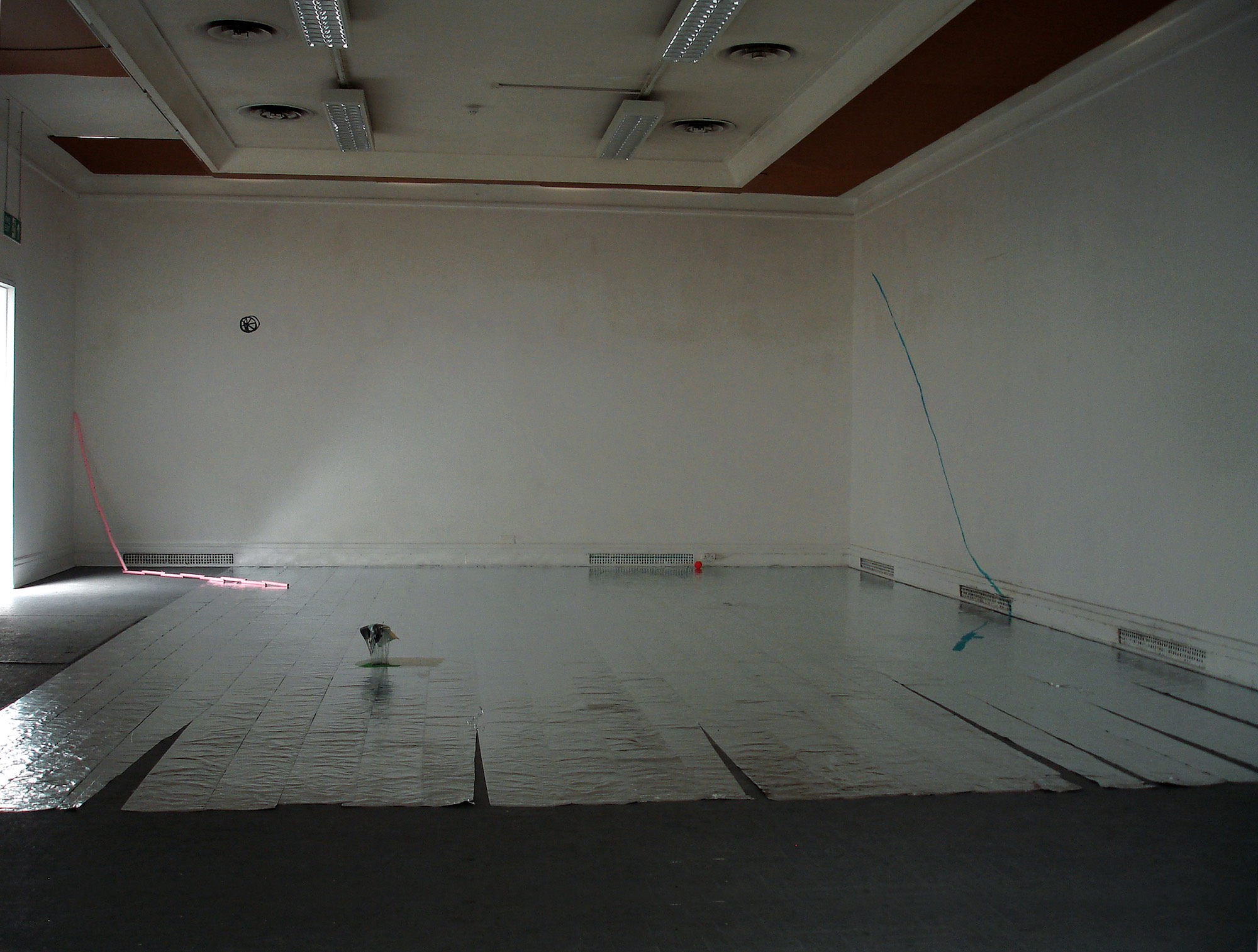
Whatever the shape was evoking, the overall presence of surface was enough in its own right. The perimeter edge where two sides of the surface met the wall was mesmerising. I sat for a long time, watching layers of light bounce, flicker, and fade up the wall, while shadows formed flat three dimensional spaces, like illusionistic charcoal drawings. Sensory rapture. Low budget James Turrell.
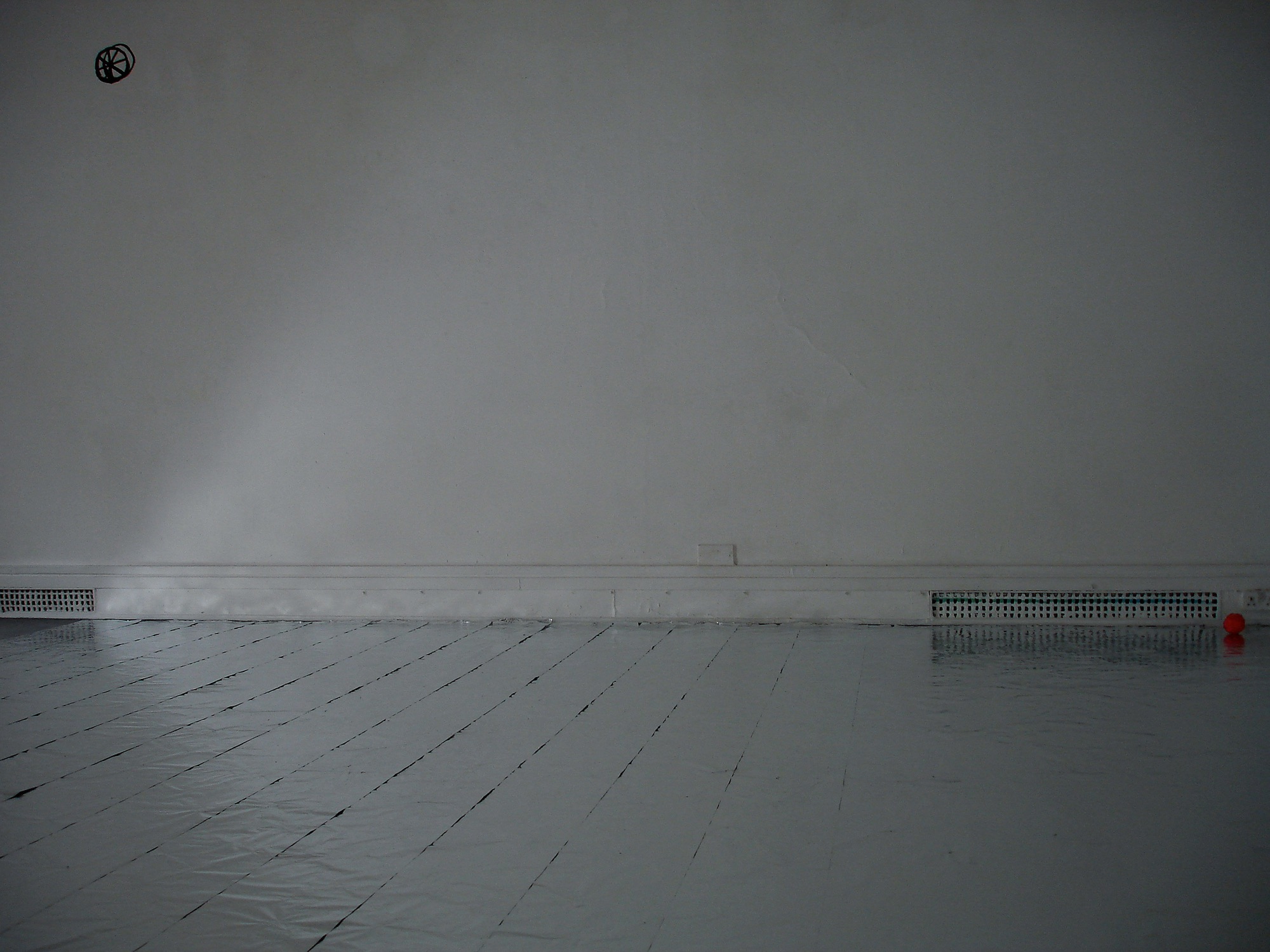
Then I tried walking over the surface, exploring it freely as a whole for the first time after the initial algorithmic roll-out walk. Wow. Being within the foil scape was highly visceral, light changed with each step, bringing impressionistic distorted reflections of the ceiling and my body. The weight of each step laminating foil between floor and foot, paths of my movement casting the ground, becoming some kind of embossed drawing.
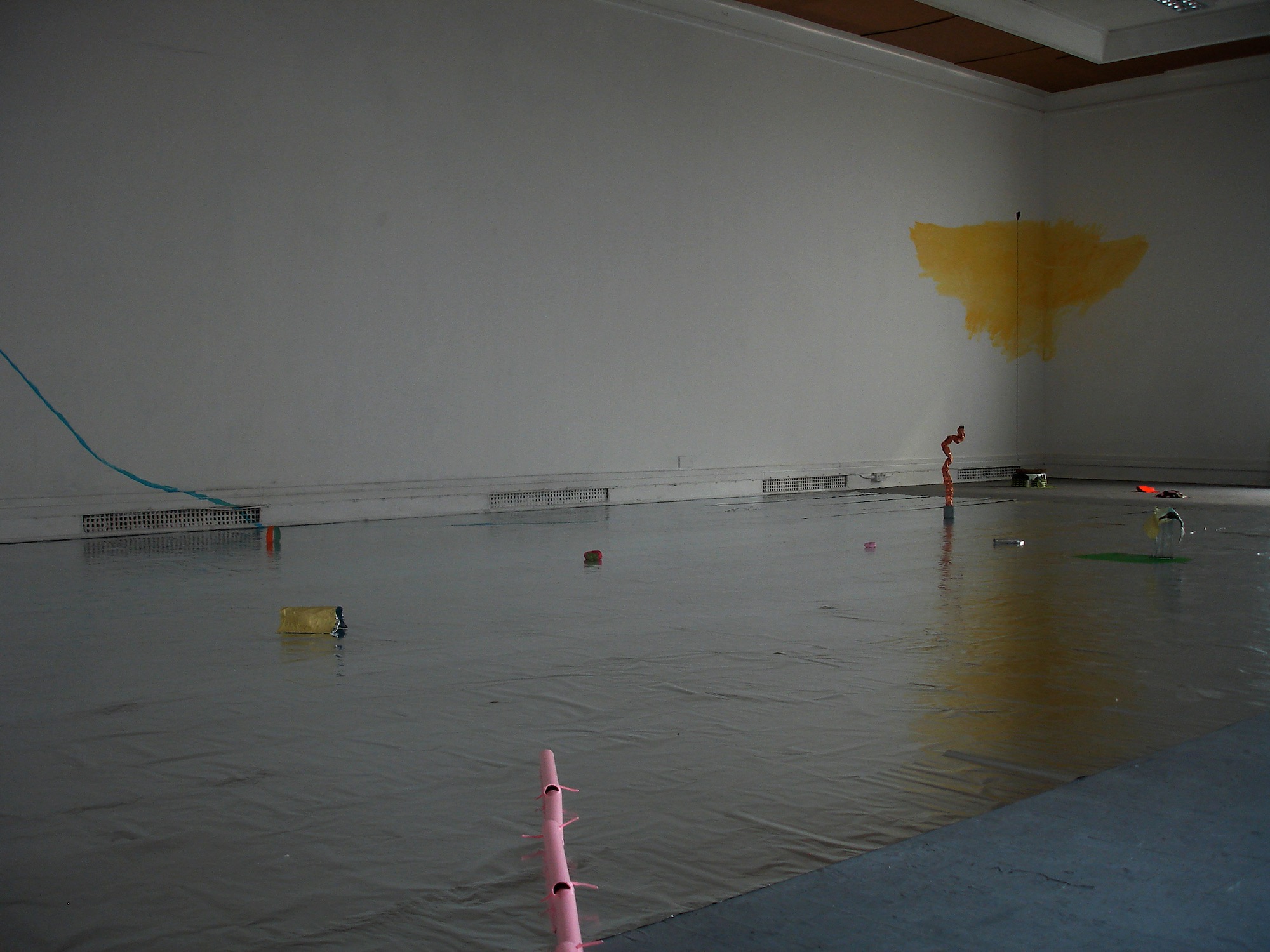
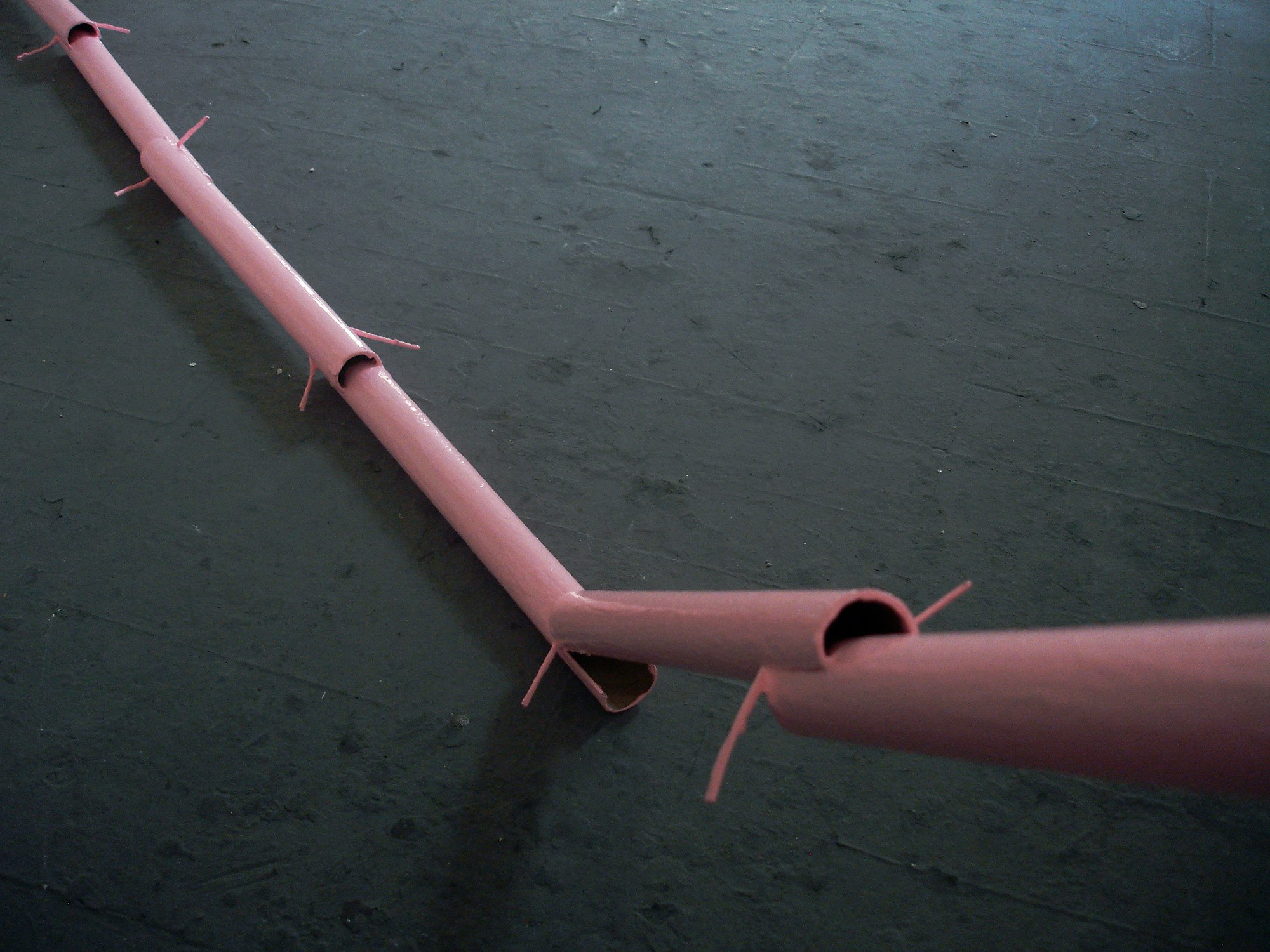
Turrell would have shown restraint and simply let the material be, but… well, I’m interested in agitating restraint so experimented placing, and moving about, colourful painted objects on the surface… and painting directly onto the foil, blocking out areas of shine. The leftover cardboard tubes from each roll were slotted and joined into one long structure, painted pink, and leant into a corner wall, slouching onto the foil surface. Kind of absurd and poetic at the same time, a crude echo of a Giuseppe Penone tree sculpture.
It’s stimulating thinking through doing, exploring how painting might work as a full body immersive environment, through spatial dynamics, relations, participation. I invited a group of fellow students into the space, and it was interesting watching many people move around at the same time, as moving parts of the painting, gradually forming a collective haptic trace.
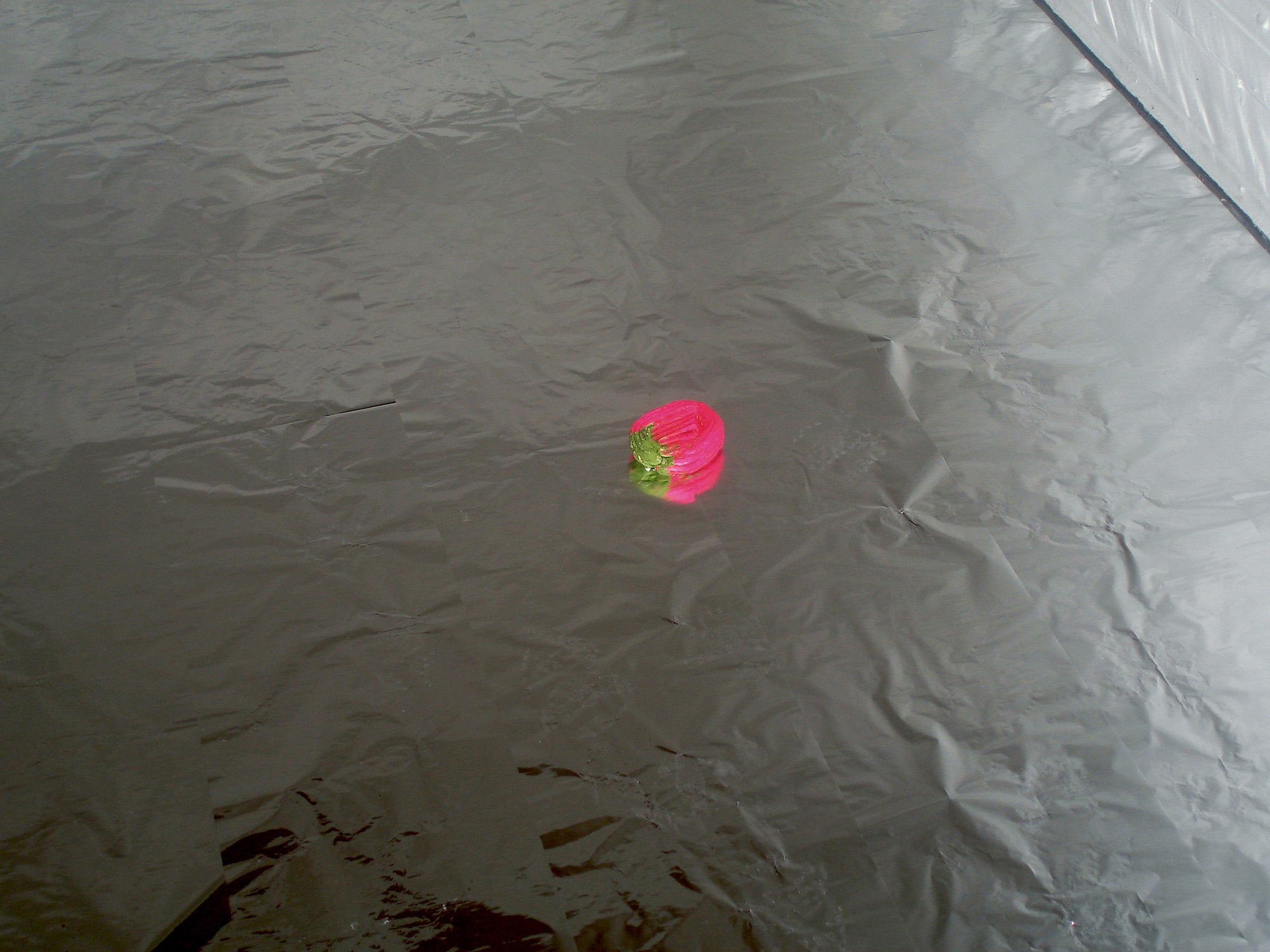
Reflecting on this work, almost 19 years after making it, I can remember being super interested in an Arte Povera book with a text including the phrase ‘paradigm shift’ and being curious about it, thinking I got it, but not fully understanding the meaning. But I can see it now, how that foil roll-out set in motion a slow burn paradigm shift in my thinking about affect and co-authorship.