chatting WITH ADRY SHEARD
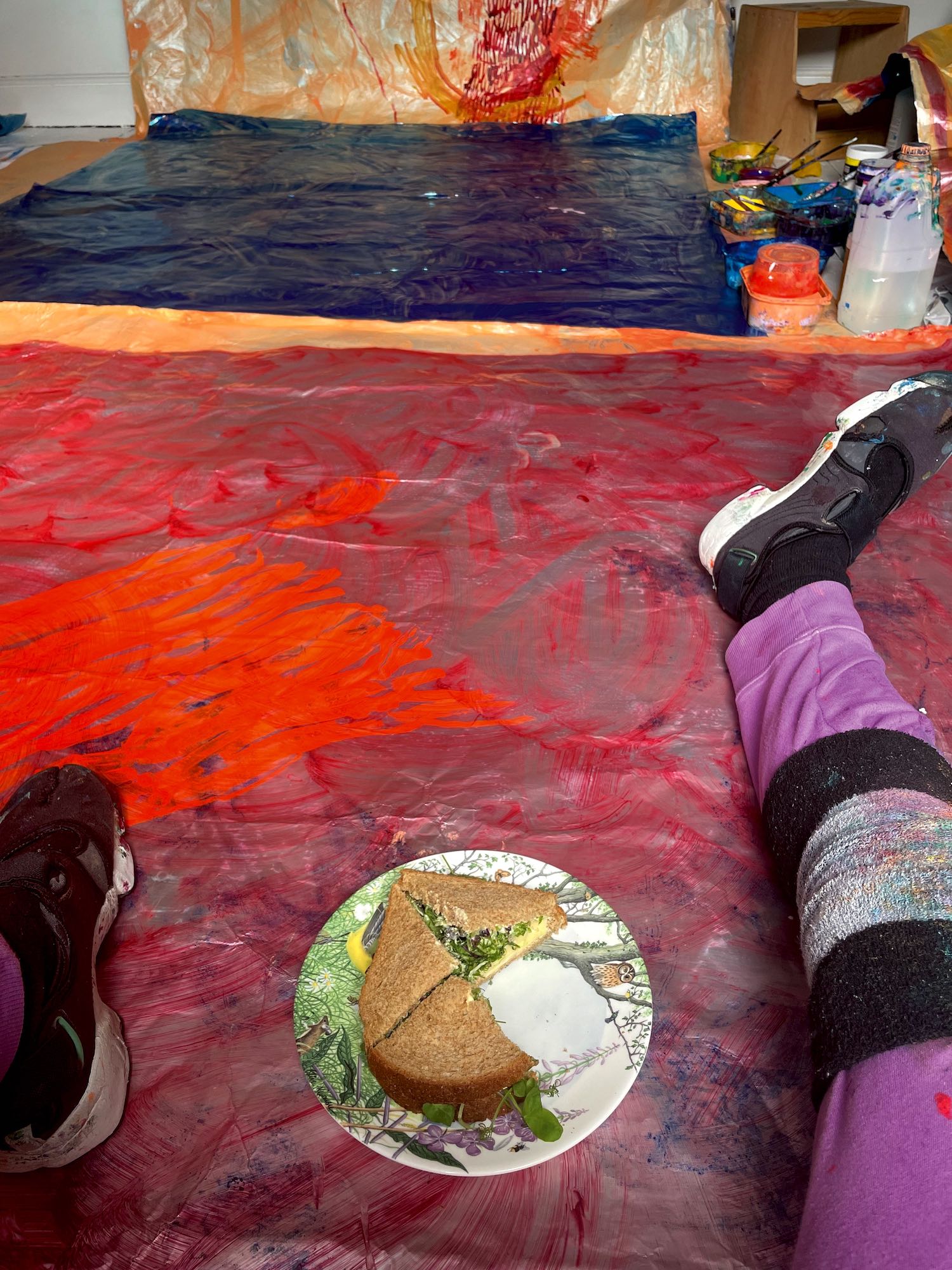
My old friend Adry Sheard (photographer and writer) tried to interview me on the bus from Colwyn bay to Llandudno… but I was feeling too exposed and my speech turned to a jagged whisper making it difficult to record.
So we hopped off and went down to the beach, where the wind battered the microphone instead. But you don’t have to listen to the oddities of our recording because I transcribed it and whacked it in my MULTIFERALS zine, and figured I could add it here too…
AS: You’ve been a practicing artist now for over 25 years. Can we start by you telling us briefly how you got into art?
SR: By happy accident, from a humiliating moment in my first A Level French class, revealing I was well out of my depth, resulted in a panic subject switch to art. Contemporary art had never been part of my life except for the occasional tabloid headline and one school trip to Mostyn in Llandudno. My art knowledge was limited to that, plus a print of The Hay Wain hanging on our kitchen wall. Anyway, I had my first A Level art lesson and that was it, I was hooked. Blown away that people had chosen to spend their lives exploring colour, form, composition, and I was suddenly aware I could become part of this ongoing conversation, this massive expanding history of coded stories with time-travelling artists crossing centuries to communicate with each other.
AS: Numerous centuries! In the Chauvet Cave there are paintings from around 40,000 - 32,000 years ago with marks made 5000 years apart in some cases. Roughly the same age as writing! Although some cave art could be interpreted as being proto-writing within the painting. Painting… writing… I digress. The point is, you were excited how art lets our imaginations roam the wilderness of time.
SR: Exactly, tapping into some ancient, yet contemporary mysterious part of ourselves. I don’t even have the words to say how much I’m into this. My teacher warned me art was not a sensible career choice if you’re after earning money, but I didn’t care, I had now firmly decided I was going to be an artist. But a landscape painter – not one of those “bloody modern artists.”
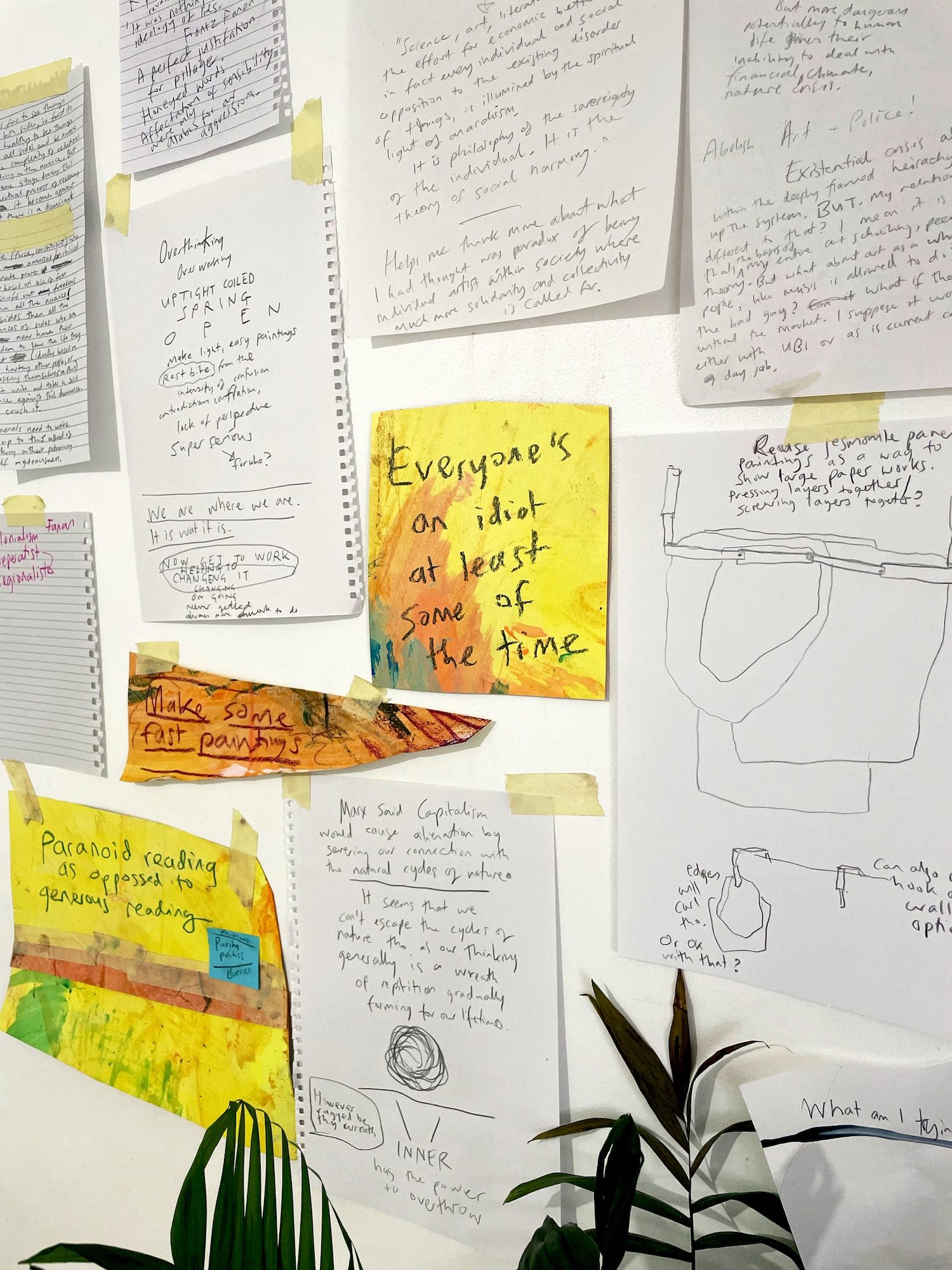
Studio wall gathering scraps of notes, quotes, quandries, scribbles and the like throughout 2025.
AS: Love the realism of your teacher… and your commitment to landscape painting. Ahem.
SR: Ha! I appreciate when people tell it like it is, tutors on my BA and MFA made it clear too that my kind of art isn’t exactly living room material (by this point, I’d gone well and truly off-piste from my earnest adolescent convictions). I decided to do a 9–5 to support my art, so I could keep the freedom to make it how I want. Don’t get me wrong, I do believe artists should be fairly paid for their work, including time to experiment – and explore mess ups – as part of the process towards innovation. In the meantime, day job it is. Which is how many artists survive anyway.
AS: I heard the Universal Basic Income pilot in Ireland seems to be having a positive impact for the artists lucky enough to receive it…
SR: Yeah, I’m keeping an eye on how that develops. At least it’s a sign of improvement.
AS: So how has the balance of day jobbing and maintaining your practice panned out in reality for you?
SR: Mainly it’s good, but I’d be lying if I didn’t also say it can be frustrating and depressing at times. We’re often skint, live in a fairly chaotic, grubby way, and are a bit shit at keeping in touch with family and friends because we’re always trying to salvage time for art, while caring for our kids. Thankfully, my husband is also a day-job funded artist so we have mutual understanding of our chosen paths, and our kids seem to be thriving in this kind of environment.
The main hindrance is lack of time and space (materials-wise, I’m with Arte Povera, make art out of whatever, poor materials are legit). Over the years, I’ve developed many ways to continue pushing my practice. I seem to relish the challenge of lack and enjoy finding my own idiosyncratic ways to survive. Flipping the bird to conventions. Confronting not having the ‘ideal’ is empowering, opens up unexpected creative responses, and questions about the origins of ‘ideals’ and pressures of ‘expectations’.
AS: Makes me think of Richard Wentworth’s photography series ‘Making Do and Getting By’… funny, tender, humble, elegant, absurd, brilliant. They feel so familiar, these wonky anonymous examples of everyday problem solving. A natural part of our human creativity and survival.
SR: I have a mantra: I do the best that I can, with the resources I have, at my own pace. AT MY OWN PACE. That bit is most crucial, and an ongoing practice for looking after my mentals. Making peace with the feeling of wading through treacle so I can notice things I’d have otherwise missed. For example, my lived experience has made me more conscious of being working class and curious to get a grasp of the mechanisms and consequences of capitalism, while also looking into more socially just alternatives. I get cyclical hang-ups about what is the point of art amidst the myriad of global horrors we’re increasingly aware of. Not to mention the impotent cynicism of puritanical politics, and weight of neo-liberal guilt-loading shifting responsibility from corporations to individuals. All resulting in feelings of helplessness, alienation and crushed self worth.
AS: Talking capitalism is quite the ‘buzz kill’, to quote Nish Kapoor on a recent podcast.
SR: 100%. Yet despite this, there is growing resistance towards capitalism, as we’ve just seen with Mamdani getting elected. The movement towards social justice is holistic, and everyone has some amount of agency to keep the collective going. Not just waiting on politicians, celebrities, or more-educated-than-me’s.
AS: You were a Town Councillor for a bit weren’t you?
SR: It was in 2021. The opportunity to volunteer as a Town Councillor arose and it felt like something I needed to try. Navigating the municipal bureaucratic labyrinth was an incredible learning experience. I can talk about the obvious negatives of party politics slowing things down, but it opened my eyes to the care and energy of grassroots networks in our local communities. Especially when we came together to save our public library from loosing it’s heritage building. This wasn’t just councillors, it was loads of people united because the library building is full of memories and textures... over 120 years of people taking pride in knowledge being accessible to everyone.
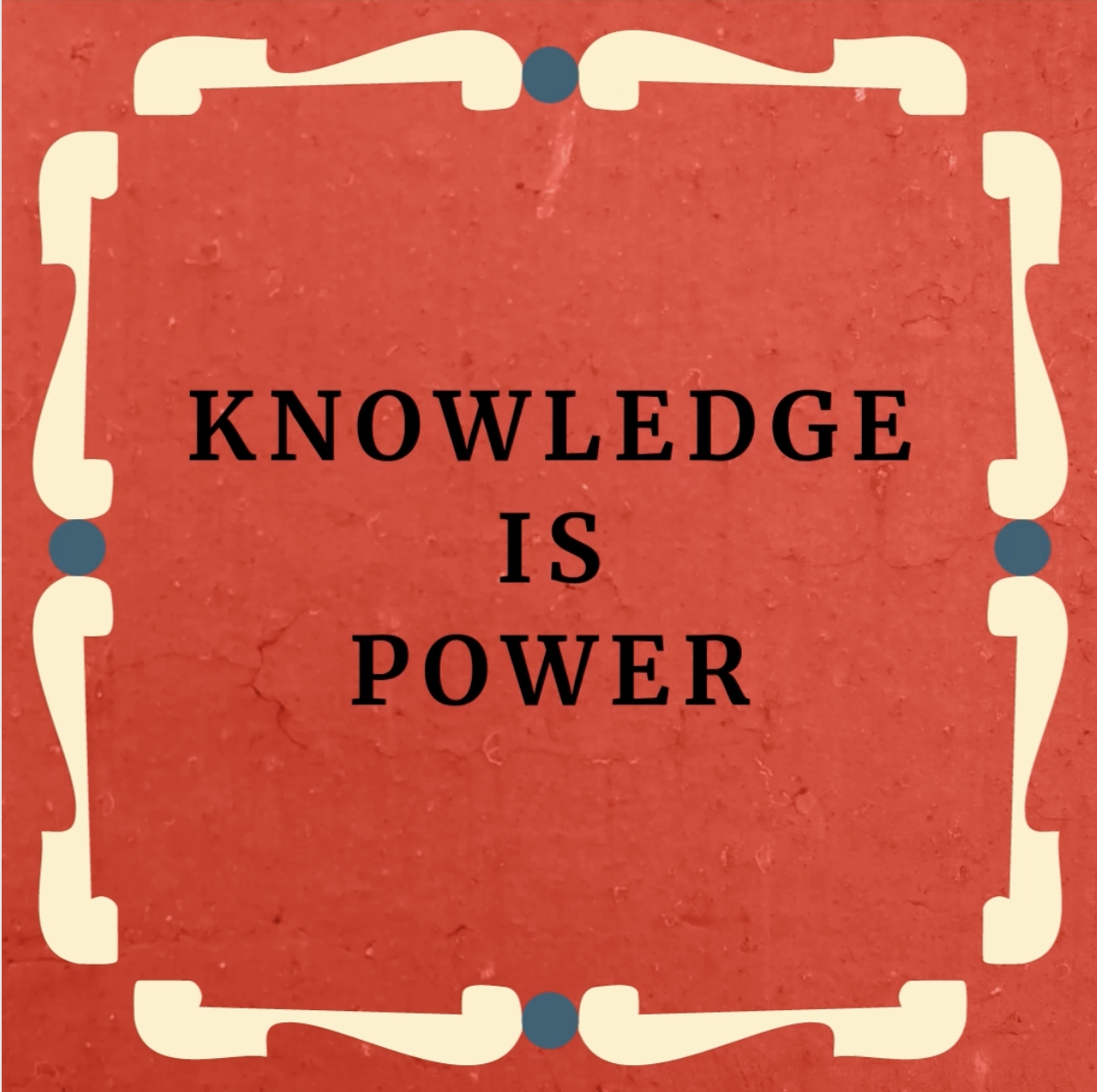
Animation still of Colwyn Bay library campaign as part of a collective effort to raise community awareness and participation of the public consultation in 2021. Not made as an artwork, but connects to my art/life practice.
AS: That’s a great story about the library. But local politics wasn’t to be a career path for you?
SR: I managed two years, and for the most part enjoyed it, but juggling town councillor duties, my day job, being a mum, and maintaining my art practice, I was heading for the point where I’d be rocking under the table, doing everything badly. So I decided to close that chapter and value all the years of practice based research that’s gone into my art. Trust it will connect and uplift at least a few people. Same as I get uplifted from other people’s art. It might not be making policy change, but it does count for something positive in society.
I’m much less panicky now, and have more understanding of what it means to be alive within a massive sprawling international collective. We’re all in this together, and part of keeping on going towards building a fairer future for everyone is to energise each other with culture, ideas, joy.
AS: A re-calibration of something quite basic gleaned from a complex experience. And what does this mean for your art?
SR: Yes. Essentially I (we all?) need to play. It’s profoundly basic. Handling stuff without any desired outcome. Allowing brain and body time for material engagement and sensory movement, working freely together to make this weird art stuff.
AS: You’ve been researching into play for a long while now, but also ideas of the feral. Can you tell me what connects those two ideas for you?
SR: I keep finding that the edges between play and feral are blurry. Both feel like ways of being that resist domestication. Play is about curiosity, autonomy, and freedom – moving through the world outside of capitalist productivity. The feral idea builds on that, representing a resistance to systems of control. It’s about reclaiming freedom in the most primal way. I have strong memories of different forms of play as a kid; social and solitary, for fun and as ways to escape or process tricky situations. So when I said earlier about the connection I felt all those years ago in art class… I mean it was like an epiphany: the way I’d been used to thinking as a child, that imaginative, non-linear, wordless way, was actually a kind of global language that still exists in adulthood.
AS: Like discovering continuity between child and adult modes of creativity?
B: Play isn’t just something we ‘grow out of’; it’s something that changes shape as we grow. It’s a way of thinking that’s vital for human development, and for collective imagination. I wonder what would happen if we valued unstructured, free play much more throughout life. Especially for children, but also for adults. Like adults might play sports, or games, which is great, but these are full of rules which is paradoxical to free play. Free play gets more difficult for adults. But what if we nurtured it and everyone had time and access to it?
AS: Things might be very different… But our culture doesn’t exactly make space for that.
SR: No, because we live under capitalism. Which, frankly, is a dumb-ass, unsustainable pyramid system sucking life from everything for the benefit of a few at the top, with no regard for consequences. It’s not in the system’s interest to encourage play, because play leads to curiosity, and curiosity leads to thinking, and thinking sparks change.
AS: So that’s where the idea of “feral” comes in for you?
SR: Yeah. Feral has a lot of meanings, but I think of it’s potential as a kind of joyful, radical break from capitalism’s efforts to tame us. Maybe it is the way adults access free play. A way to reconnect with our deeper selves, stepping outside the behavioural codes we’ve been conditioned to obey. It’s like a flow state, where ideas that are usually suppressed or dormant can finally move freely, without the usual societal filters. Children effortlessly absorb knowledge when their brains are without the clutter of stress, then process it into learning through play. I know our adult brains are a lot different, but we can always change how we learn. Making time for feralness might be like a glitch in the system, a temporary rupture in obedience, a chance to develop ideas.
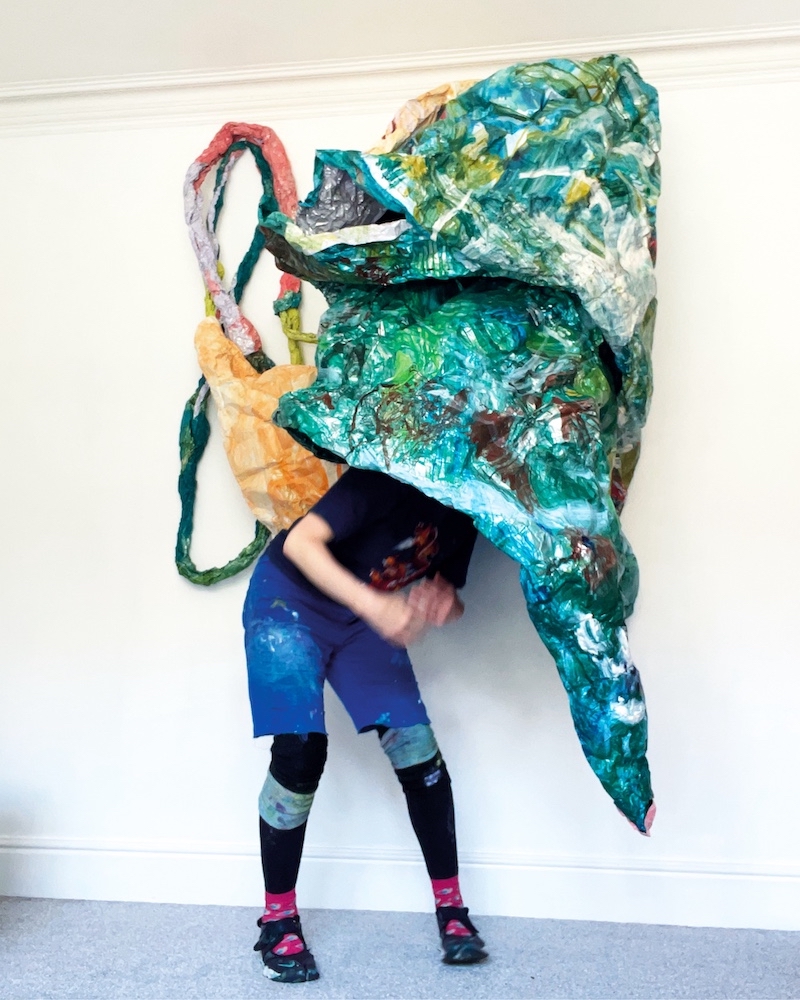
Playing with Temporal Feral Forms in our living room, 2025.
AS: You’re not after going back to some primitive ideal are you?
SR: Not at all! It’s more about recognising that humans have a basic intelligence that’s compassionate, cooperative, kind, and creative - and that those qualities get dulled by systems built on hierarchy and competition. There’s a real hunger now for a more socially just, playful way to live.
AS: You’ve also connected this to anarchist ideas, right?
SR: I went to a Playwork conference in 2019 at Ty Pawb in Wrexham, where I heard a lot of brilliant practitioners and academics share their knowledge about play. It intrigued me how anarchism came up as a comparison. But it makes so much sense. Play is inherently anarchist.
That realisation excites me. I am certain play is not just important for children, but essential for everyone, at every stage of life as part of holding on to our humanity.
AS: Play, freedom, anarchism. I remember you telling me that quote from David Graeber about play being the quintessential form of human freedom.
SR: Ah, that quote’s great. It’s from an interview he did with Maja Kantar for DiEM25 not long before he died in 2020. I often wonder where he’d have got to with his thinking about play. I enjoy reading Graeber. His essay ‘Fragments on Anarchist Anthropology’ is brilliant connecting anarchist political philosophy and anthropological knowledge, but I noticed it was predominantly about men and wondered where the women were within anarchist thought. I started delving into other perspectives… and there’s loads of amazing writing I’m currently working my way though; Emma Goldman’s ‘Anarchism and Other Essays’ showed up, then Saidiya Hartman’s ‘Wayward Lives, Beautiful Experiments’, Silvia Federici’s ‘Caliban and the Witch’, and Chiara Bottici’s ‘Anarchafeminism’ which is full of different voices – and the philosophy of transindividuality.
AS: Seems like you’ve found a rich stream. I never heard of transindividuality, what does it mean?
SR: It’s the idea that our individuality is formed through our relations with each other, our communities, environments, and shared struggles. We’re networks of interdependence. I am we. An acknowledgment that individuality and collectivity aren’t opposites; they’re interwoven. I find this perspective exciting because it aligns closely with how I see the world: fluid, imperfect, non-linear. It’s also why I’m drawn to anarchafeminism as a worldview embracing complexity, non- hierarchy, and solidarity.
AS: That’s great. I can see resonance in your art, like how it’s never complete, old pieces get mixed up with newer ones, and they all might return to material, or be presented again as art. Either way, its still material. However close to entropy they get, there’s a recognition of the multiple histories and relations within the form. Can you say something about the materials you’ve chosen to work with for MULTIFERALS, how you got to this point?
SR: Go back to around 2019. I didn’t know what my art would look like after several years of life events dislocating time and space, but made a decision to fully embrace every aspect of my life and let it flow into my art, removing all bullshit pressure. Any aspect of ‘art proper’ or ‘professionalism’ or ‘second-guessing’ had to go. These things aren’t always apparent by the way, they can be insidious little habits that need a bit of time to notice.
I’ve used aluminium cooking foil quite a bit over the years. It’s cheap, has a great range of properties, and using it with paint I love conceptually how it becomes wholly part of the painting as surface and substrate. Materially there was a lot left to investigate that I’d hadn’t previously done, and I had ideas I wanted to try with paint, so I decided to focus on these two materials and see what happened.
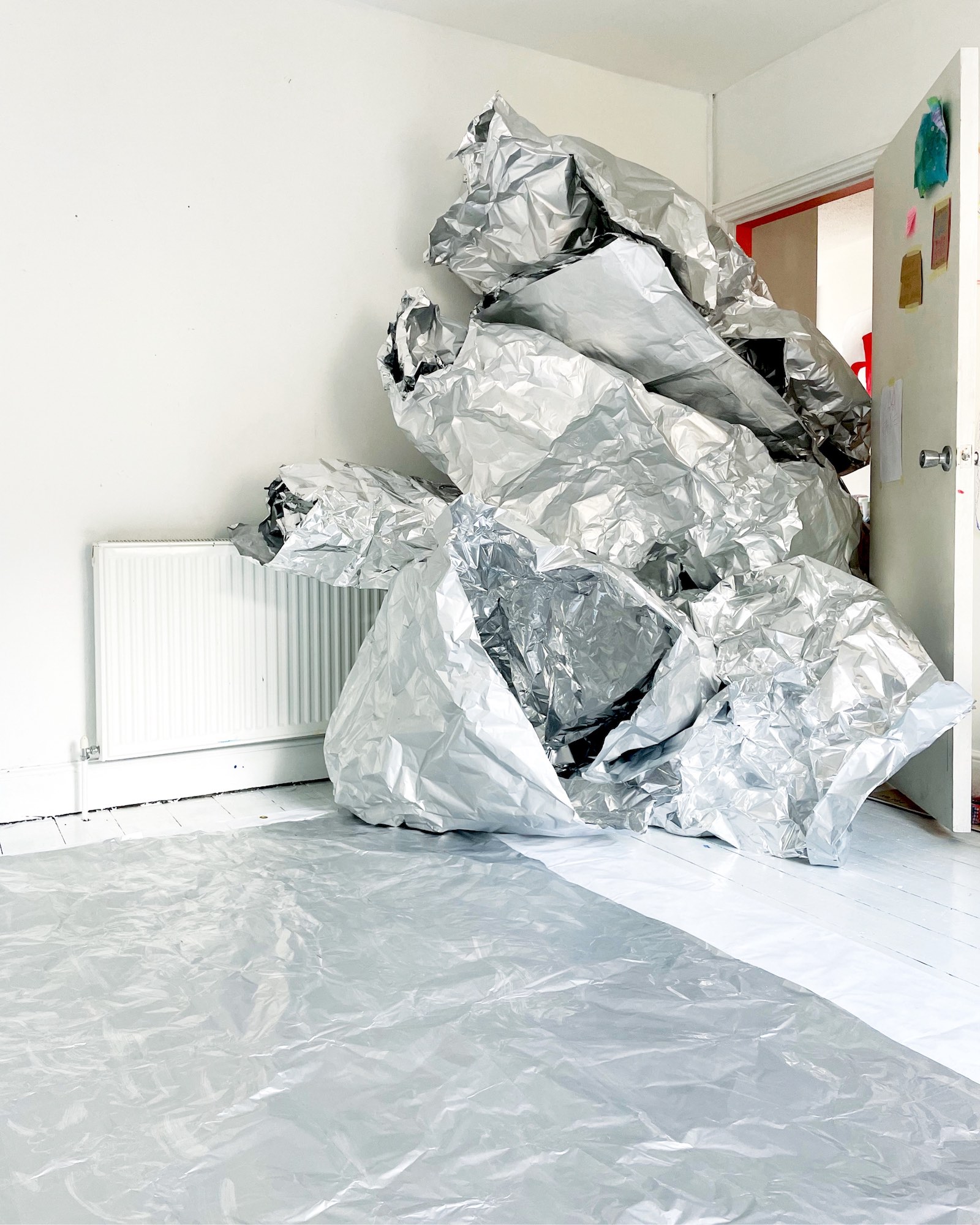
Several foil surfaces block the doorway, while another lays flat on the floor, 2024.
AS: You’ve written about how you continue painting long after the paint has dried, almost like collage maybe? Assembling double-sided paintings into forms which become texturally incredibly noisy. And there’s a lot of colours too. How do you go about making a painting?
SR: I do quite a bit of drawing and writing, and have smatterings of these on my studio walls, I glance at these while I’m painting, and take elements from them, messing around how marks, seeing how they transmute with differing scales, rotations, bodily gestures. Once a few marks are down it opens into a free play of movement and response.
Foil is flexible, easily portable, and gathers an embodied history. I’m not fully in control. It’s also highly sensory. I love how colours sit on the silver ground. How they nudge against, and change each other, overlay, scrape off. I enjoy the feeling of pushing the paint around on the foil, using my hands, feet, and various tools. It’s deeply physical. Feeling the hard floor from underneath (picking up incidental casts and tears), or the falling in the softness of air behind when painting on a free-standing form.
Another thing about working with foil is how it plays with light. The way light hits it distorts the painting, creating new information, shifting over the surface depending on the angle. It changes the way I see the piece, constantly evolving.
AS: You are clearly very into foil! How do you actually make the surfaces?
SR: I glue lengths of cooking foil together, making surfaces which almost fill the clear area of my studio floor (approx 2.2 x 1.5 meters). I like working on several paintings at once. The funny thing is I then have, say, 9 of these double-sided surfaces to work on in a 11m sq studio space.
AS: I love how absurdly optimistic this approach is!
SR: It’s a challenge for sure. The paintings get into all kinds of situations, layered over the top of each other, slumping up the wall, free-standing caves, crawled under, stretched over, dragged against each other, trampled on, scratched, shook… all kinds of things, while regularly rotating and flipping them over. Sometimes I imagine my studio is the drum of a washing machine. I wear ear defenders now because it gets very noisy and I reckon that’s why I have annoyingly got high frequency hearing loss.
AS: Oh dear.
SR: At dry stage of painting you mentioned… I mean can I really call it that? I think so. That’s when I’m assembling individual paintings; folding, rolling, squeezing them into these exoskeleton support structures. To me it does feel like painting process, as I’m conscious of colour, surface, composition. But I’m also veering heavily into sculpture as they take on volume, form, physicality. My body is very much a part of making the forms, sometimes I feel like a snail creeping out of these rotated geometric forms.
Other forms are more like adult-chunky-jumper size and have a process a being turned semi inside-out as part of their history. I experiment and move things around a lot. I notice that when I de-install work to pack it away, some very cool stuff happens. Maybe lack of pressure brings an ease in the handling. So I know that when I have something kind of working, I can likely push it again, and again, and it’ll get to a more interesting place. This is true of wet painting too. It’s not an absolute rule though, I mean you can totally over work things… but... Then I get curious about that as a thing that too… leading towards entropic states of chaos and ‘ugliness’.
This brings me to Bataille’s idea of the ‘Formless.’ His exploration of the abject. Squashed spiders, spit, stuff we usually want to tidy away resonates with me. Art resisting hierarchy, embracing the base and chaotic, pushing against the idea that art must be ‘resolved’ or ‘finished’.
AS: That’s your third reference to invertebrates in the last couple of minutes! Are you a decomposer?! I realise your art is actively avoiding being finished, but how do you know when to let it settle?
SR: Ha ha! I’m into the little guys within ecosystems. As for settling... When I was a kid, we had a pet dog, who every so often would roll in some stinky dead animal, or pile of poo, so we’d have to bath her. I always loved watching the mad, frenzied 10 minutes straight after the bath. She’d run out in the garden, rubbing herself on plants, walls, branches, and then run inside the house and do the same to the edges of the sofa, the carpet, around the beds… looked fricking crazy, but she absolutely had to gather up all those smells to make her feel like herself again. That’s how I know when I can let my art settle for a while, when it’s got all that mad shit life data all over it.
AS: Infinite trajectories to explore in the feral, mad shit, life data!
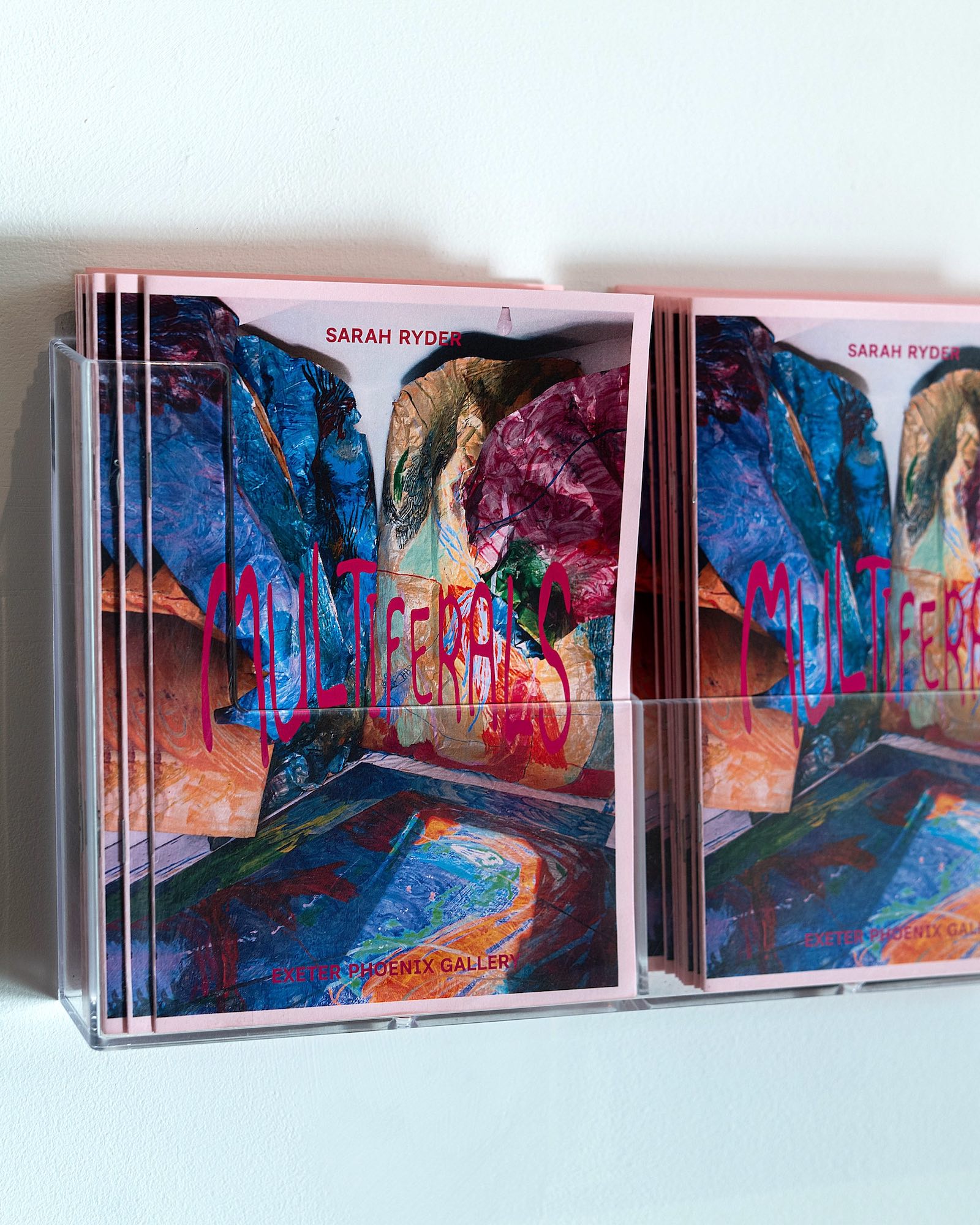
Stack of zines welcome visitors to MULTIFERALS at Exeter Phoenix Gallery, 2025.